
Teller residents voice concern over proposed graphite mine
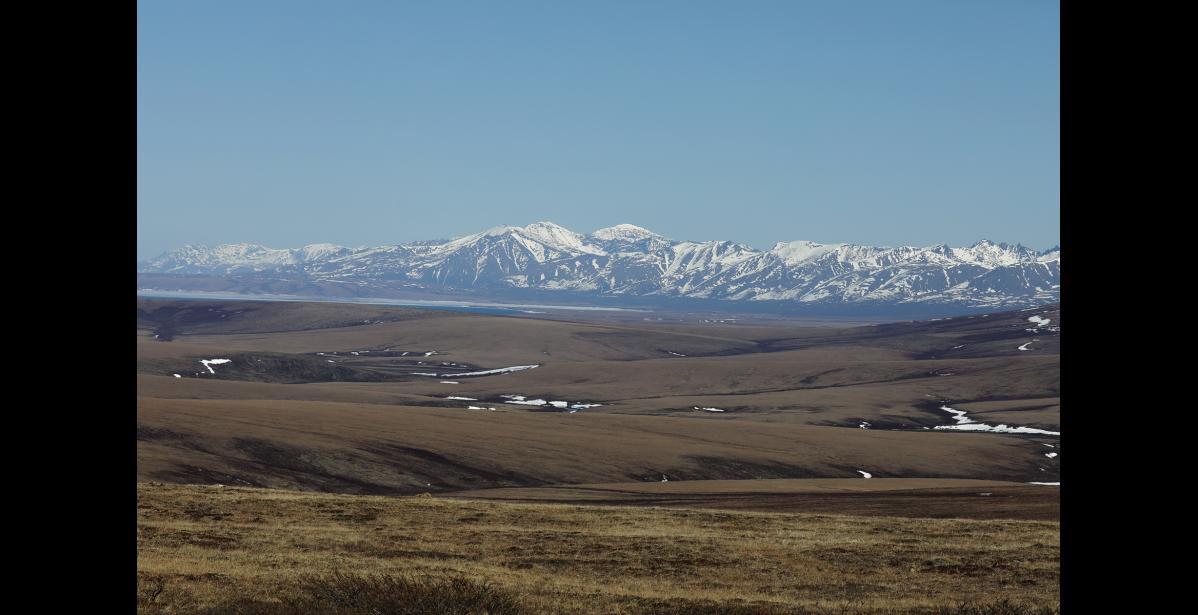
Torn between the prospect of jobs and the fear of losing subsistence grounds that have nourished the people of Mary’s Igloo, Teller and Brevig Mission for generations, Teller residents voiced their reservations to representatives of a company that proposes to mine a large deposit of high-grade graphite on the northern slopes of the Kigluaik Mountain range.
Graphite One Inc. representatives visited Teller last Tuesday for private meetings with the Native entities before holding a public gathering at the school. In these private meetings, Graphite One proposed to enter into a Memorandum of Understanding with the tribal entities to spell out verbal commitments to the communities, but no concrete agreements have been signed.
Joy Huntington with Uqaqti Consulting, community relations manager for Graphite One, said during the public meeting that she floated the idea to create a Memorandum of Understanding between Graphite One and the tribal and Native entities to “set the tone how the company and the different communities would communicate.” That MOU, she said, would address work force development, training opportunities, transparency, sharing of environmental baseline information and studies, housing, safety, drug and alcohol testing, among other things. Huntington said the MOU would be co-written by Graphite One and the tribal entities, and would serve to set in writing commitments made by the current leadership of the company. “It is not a letter of support. It is not taking away any of your rights to speak your minds,” Huntington said.
Mentioning leadership changes in the past at the company, she added “it’s good to have another way to formalize relationships and be accountable to commitments that were made.”
Meeting
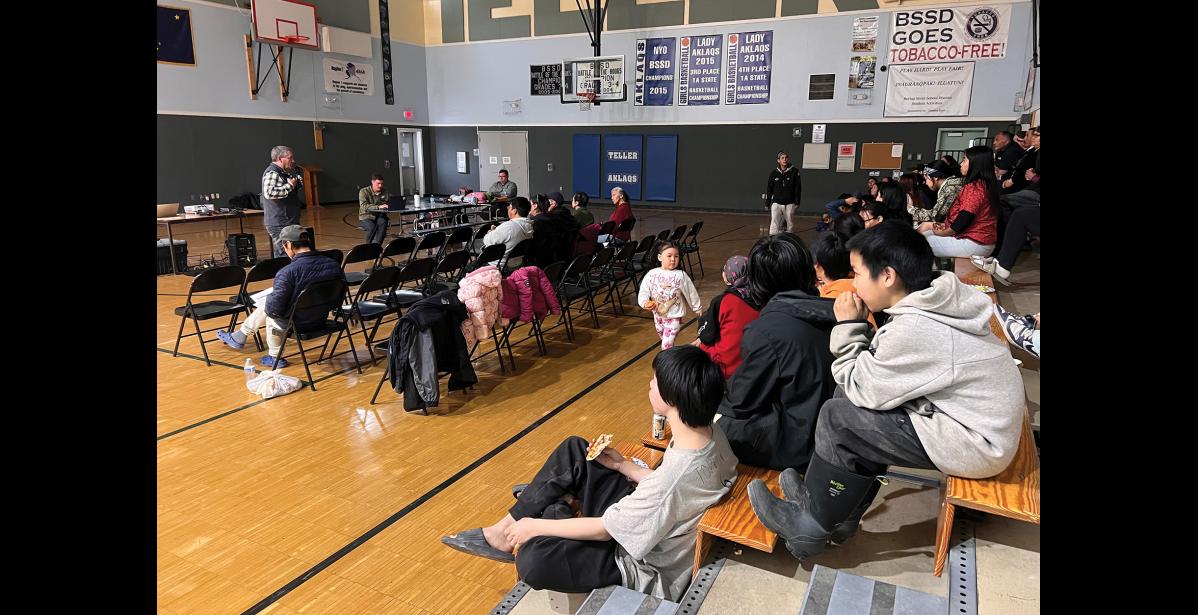
The Teller public event featured a pizza lunch, soda and door prizes that included AC gift cards, fishing poles, kids’ bikes and camping gear. In the audience were mostly families with young children, but also Bering Straits Native Corporation representatives and board member Tyler Ivanoff. A meeting planned for Brevig Mission was canceled by the Brevig Mission Traditional Council, saying that the June 1 meeting date was set by the company without tribal consultation and that the “chosen date coincides with a time that the ice is moving out of Port Clarence Bay, a crucial period for tribal members to take part in vital marine mammal harvesting activities.” In a press release, the traditional council stated that they are open to “collaborative dialogue with Graphite One” but continues to oppose “the creation of a 1.1-mile long, 1,340-foot-deep open pit, or any pit of any depth, and all associated roads, gravel pads, and stream diversions in and around the hunting, fishing, and cultural grounds traditionally used by the people of Brevig Mission, Teller, and Mary’s Igloo.”
Project overview and update
Graphite One’s Chief Operating Officer Mike Schaffner gave a brief overview of the project, starting with making the case why graphite is needed – citing a rising demand for electric vehicle batteries mostly— and the plan that the mine at Graphite Creek would produce 175,000 tons of graphite concentrate per year, stored in 8,600 20-ft shipping containers, which would be trucked to Nome on a daily basis and shipped out from the Port of Nome in the summer time for further processing at a plant in Ohio. He highlighted the ongoing commitment to incorporate community feedback via subsistence advisory committees that were stood up in 2018 to inform the company of the communities’ concerns. One of the most pressing points is the resistance to barge or shipping traffic through Grantley Harbor to the Imuruk Basin to pre-stage materials for the beginning phases of construction. Schaffner acknowledged the concerns and the company is looking at a work-around.
Vice President of Mining Kevin Torpy delivered a project summary. In broad strokes, the project would entail an open pit mine, a processing plant that would process 10,000 tons per day; a mixed dry and wet tailings storage facility including a dam to contain the wet tailings, water management and treatment facilities and a substantial power plant to power the mill. In order to build the mine, an access road over state land from the state-owned and maintained Kougarok Road — a rough gravel road in no shape to accommodate industrial trucking traffic— is needed.
The company’s plan is to operate the mine and mill year-round, to truck concentrate from the mine to Nome on a daily basis, to truck fuel from Nome to the onsite powerplant and to shuttle mine employees daily from Nome to the mine and back.
This summer, the state has permitted geotechnical drilling along the proposed access road corridor. The proposed access road would start at mile 30 of the Kougarok Road, be a double lane road, cross over several streams via single-lane bridges, lead through Mosquito Pass and by Windy Creek to the northside of the Kigluaiks. Incorporating concerns voiced during Subsistence Advisory Committee meetings over the fear that people traveling from Nome would use the road to access subsistence resources and put undue hunting and fishing pressure on Teller and Brevig Mission, Graphite One plans to propose that the road would not be open to the public.
According to Torpy, the plan is to cover the crushed ore stockpile to control dust, saying that photos one sees in the media of Chinese graphite mines showing communities covered in fine black graphite dust, won’t be possible in the USA due to regulations. For dust control on the roads, Torpy said capping of the Kougarok and access roads as well as running watering trucks should keep dust caused by traffic down.
A slide in the presentation showed how the partnership with Bering Straits Native Corporation resulted in community commitments, such a company contributions to SAR equipment, washing machines, fourwheelers and contributions to the seasonal emergency shelter NEST in Nome, scholarship accounts and promises of preferential hiring of BSNC shareholders or descendants.
Reactions
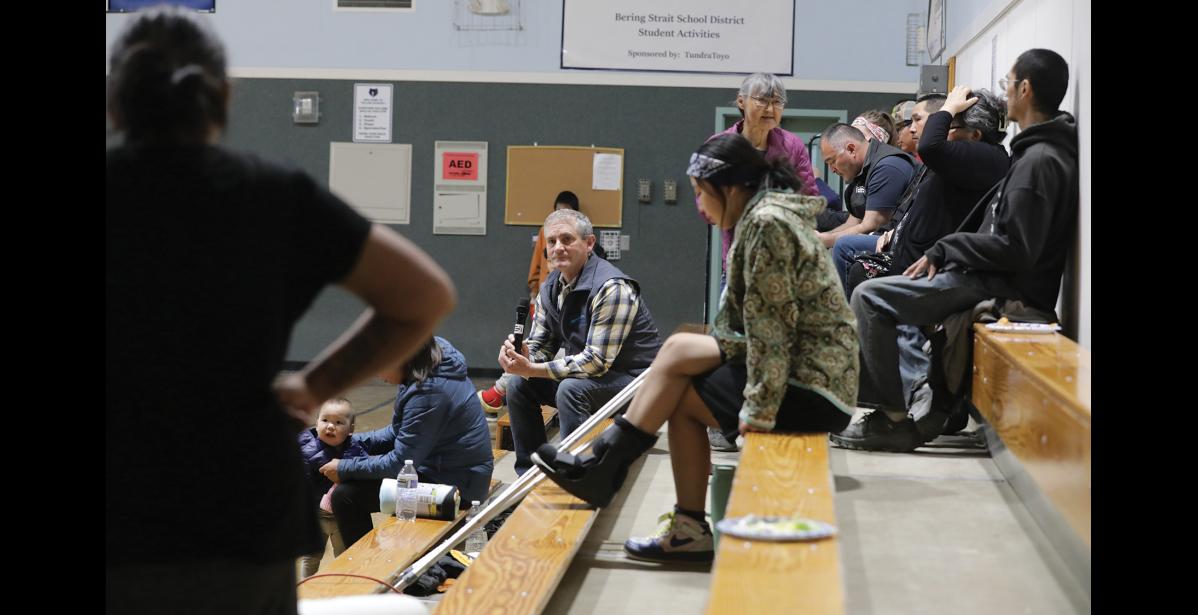
At the end of the presentations, questions and comments centered on the proposed access road, the feared permanent loss of an unspoiled subsistence area and jobs. An audience member said bluntly: “If this mine goes in, we’re going to starve to death.”
When will the mine open? Schaffner said the earliest would be 2029. “That is if everything goes perfectly,” he said. First, the access road needs to be built and Graphite One needs to secure permits from the state to do so. To get a head start on building the facilities, Graphite One proposed to barge some construction materials through Grantley Harbor, Tuksuk Channel to the Imuruk Basin but the proposal met resistance to the point that the company reconsidered.
Another audience member asked pointedly how much the company will make in revenue and what will be in it for Teller? Schaffner answered saying that it is hard to predict the price of graphite on the world market. He said this year alone tariffs on graphite have changed 13 times, which influences the price of graphite, but he expects the mine to break even.
When it’s time to close the mine, what if the land is irreparably harmed will there be reparations paid? Schaffner answered that Grapite One has to place a bond with the state and if damage or harm is done, the state would take over and a legal case could be made against Graphite One.
Company commitments
The land of the mine is a state lease, and the access road corridor is also on state land. Since the area is not located in an organized borough, none of the communities would see a tax benefit from the mine. In an interview with The Nome Nugget, Mike Schaffner mentioned the possibility of payments in lieu of taxes to be negotiated.
But the biggest concern is not about money or jobs and has no price tag attached to it. It is what residents of Teller and Brevig Mission express over and over: The land is sacred to those who live nearby and have deep connections to the water, land, plants and animals. Schaffner said he is sensitive to these concerns. “How can we do this without changing the way you live?” he said. “The only thing we want to do is make things better for you, give you opportunities.” Asked for clarification that the objective is not to mine and sell graphite but that the betterment of the local residents is the driving force behind the mine, Schaffner pointed to his past experiences of running mines that improved communities by offering housing incentives. “The one thing that showed clear and true benefit was how that community of Battle Mountain developed and evolved, because we set up the same housing that we’re proposing for here,” he said. The mine would employ about 250 workers, and proposes to develop a subdivision in Nome, to co-sign mortgages and after a set time of paying rent and working for Graphite One, the employees would end up owning the house. “You heard the comments about no housing,” Schaffner said. “I am sincere when I say we need to make the quality of life better here, so you can believe it or not believe it.”
He added, “You can see my passion on this is because you can’t go in like an old mining company and rape, pillage, plunder and get out. You cannot do that, and you shouldn’t do that.”
He added that this is where the MOU is intended to add a layer of accountability to verbal commitments made. “The MOU is a starting point,” he said. Graphite One so far is an exploration company with the goal to become a producer. It has no track record of operating a mine, but Schaffner said that between him and Kevin Torpy, they have a combined 70 years of experience in the mining industry. As Graphite One Inc. is a Canadian-owned company with an Alaskan subsidiary. The company is a publicly traded and a buyout or hostile takeover can happen any time. MOUs are nonbinding but Schaffner said that the agreements could be worked into permits that then become binding requirements that would survive if Graphite One was to be bought up by a different company.
Asked what they have learned this time around visiting Teller, Schaffner said, that people were very concerned with the two-year use permit Graphite One has to barge construction materials through the Tuksuk Channel to a landing site at Imuruk Basin. “So we’re going to go back and see if we can figure out how to not use that [permit.] It’s a bigger cost to us, but again, they were passionate, they were sincere about it, and if we can do it a better way, we’ll do that,” Schaffner said. Brevig Mission Traditional Council also voiced opposition to the barge and helicopter traffic citing disturbances of fish, marine mammals, fur bearing animals and waterfowl.
Sacred
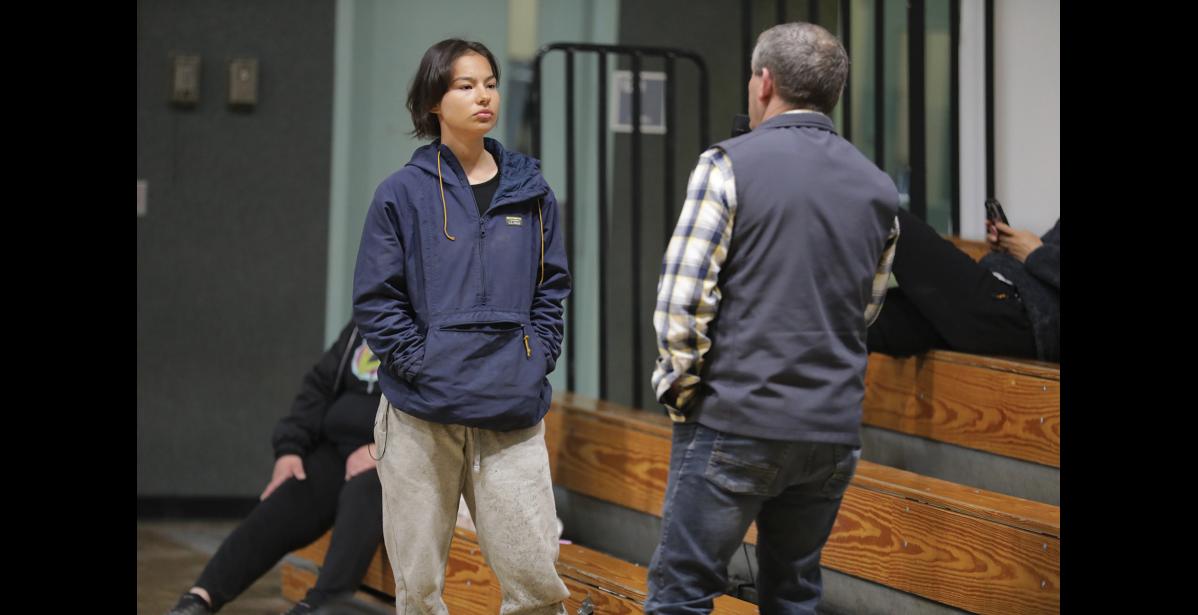
As the Teller audience dispersed, kids ran off to the playground outside the school. Elle Garnie, supervising her little cousins, spoke to the Nugget, expressing her fear that the mine is a done deal despite local opposition. Born and raised in Teller, her connection to the land runs deep. She talks of memories of her family going fishing, having campfires there, going berry picking, getting water up there to drink at camp. The land, she says, “connects me to people before me.”
“I feel like Kigluait is something that is very sacred and special to us,” she said. “I feel like it’s something we’re going to lose, and I feel like we’re not going to see a lot of benefits from losing it.”
“Kigluait. It means home mountains, those are our home mountains,” Garnie said. “It’s just very special to us, and it has an effect on all of what we do and all of how we live, and you can’t put a price tag on that. But I know it’s going happen whether I like it or not. So I’m just concerned on how the mine is going benefit from this, and how we’re just going to be left in the dust, in a way.”
Asked her opinion on the prospect of jobs offered for the 22 years of proposed mine life, Garnie said, that the trade-off is not worth it. “I’ve seen people get these jobs and they had a handful of money, and lost it, and then they were back to being broke,” she said. “The negative effects are going to impact us much longer than the money will.”