
European Starling––first documented sighting in the Bering Strait region
For those of us captivated by birds, it’s very exciting to set eyes on a new species, or on one that you know is a rarity in the region. In mid-October Unalakleet’s Rhoda Nanouk had that thrill when she spotted a European starling perched on a power line by the village’s trash baler.
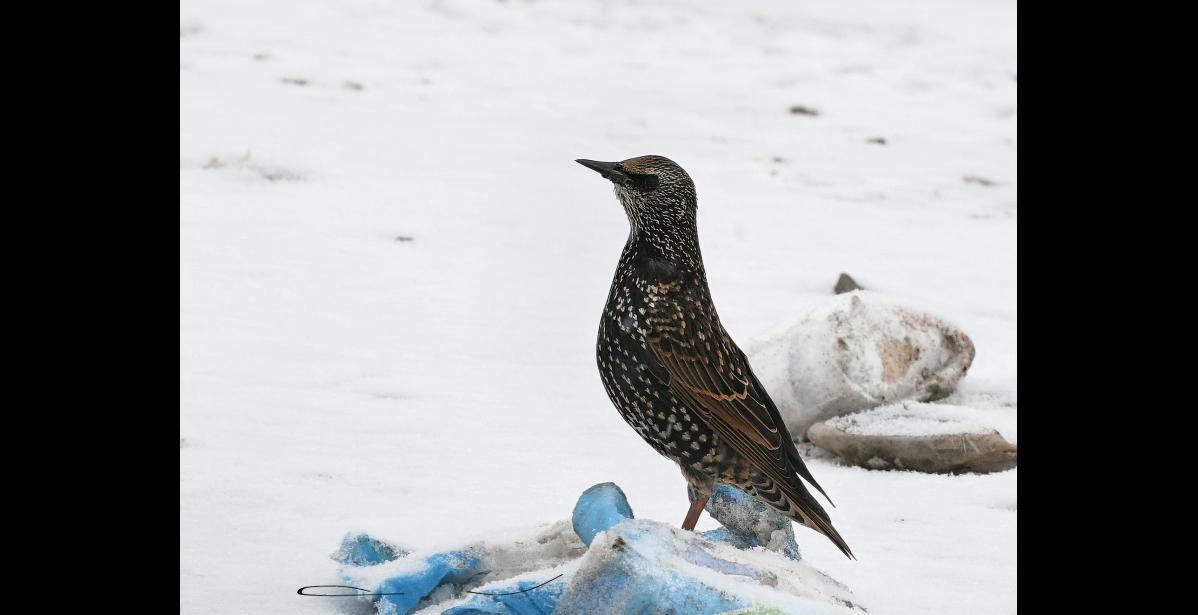
Having seen starlings in Anchorage, Nanouk was familiar with them. So when the unusual-looking bird on the wire caught her eye as she and her sister drove by, her first thought was—a starling! Excitedly, she asked her sister to stop and back up while she groped for her phone, but found she didn’t have it. Grabbing binoculars, she was elated to see that indeed it was a starling.
But Nanouk needed a photo for documentation, both for herself as an avid bird photographer, and for confirmation of a species that turned out to be unprecedented in the region.
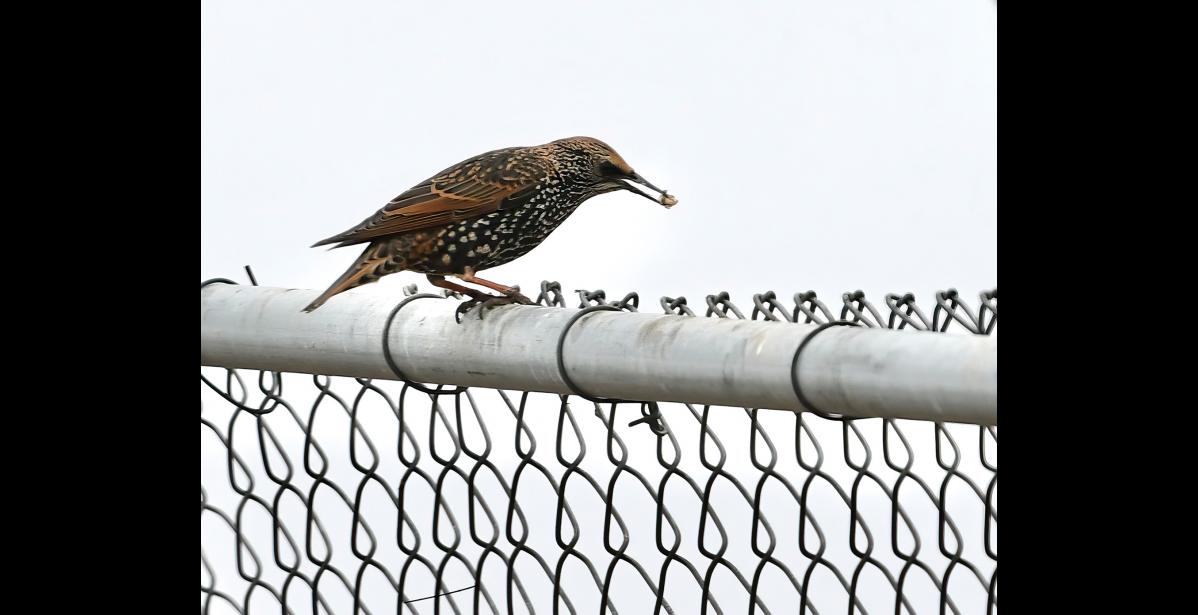
Dropping all prior plans, the sisters fetched Nanouk’s camera and returned to the baler facility, but the starling was gone. Not giving up hope, the two sat and waited for the bird’s return. About a half hour later, much to Nanouk’s surprise and delight, the starling came back, undoubtedly enticed by food scraps in the trash. Though the starling was skittish, Nanouk was relieved and excited to get photos of her rare find.
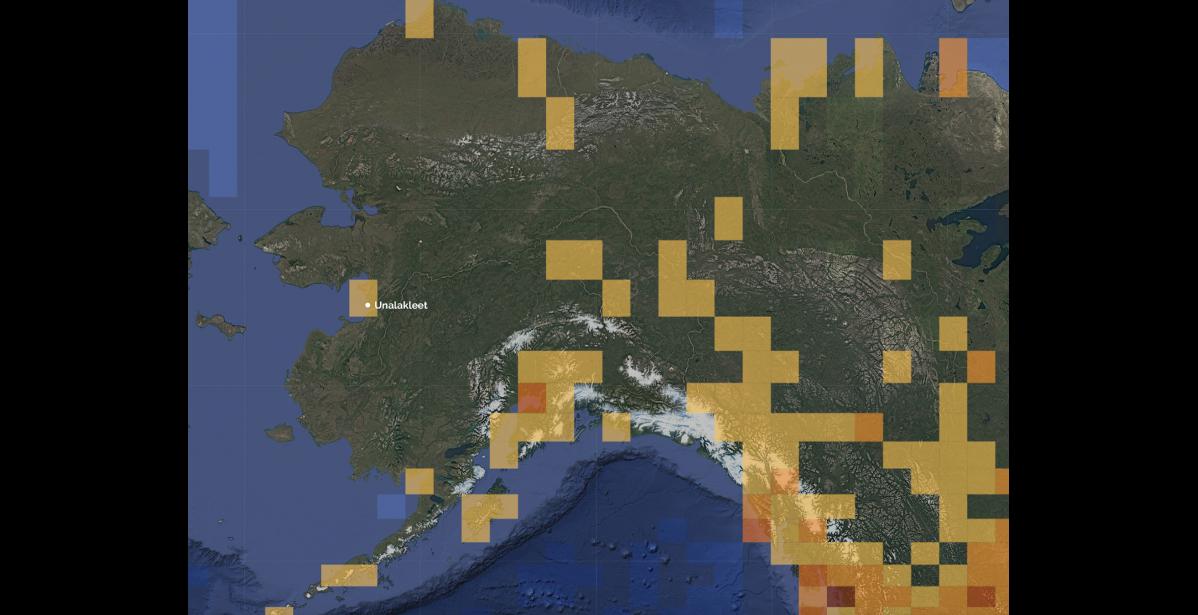
Vagrant starlings may have ended up in this part of Alaska before, unseen or unreported, but Nanouk’s observation was not only the first eBird report in the region, but the first within hundreds of miles.
The European starling is native to Eurasia, where it is known as the common starling. In the late 1800s, a group called the American Acclimatization Society introduced a number of European bird species in North America for sentimental reasons. Most releases were unsuccessful, but the European starling and the house sparrow found niches and thrived here.
The most well-known and successful starling introductions took place in 1890 and 1891, when about 100 birds were released in Central Park in New York City. The starlings were astonishingly productive, and within 50 years starlings had expanded their range across the continent to the west coast. In Alaska the species was first recorded in Fairbanks in 1960, and they had established themselves in Anchorage by the early 2000s.
The European starling is one of North America’s most abundant songbirds, at one time numbering over 200 million. Their phenomenal success is in part due to their ability to thrive amongst us in human environments—both urban and agricultural. In fact, they are mainly a bird of developed areas, which few native species have been able to exploit so successfully.
This exceptionally adaptable species is smart, and quick to explore new food and nesting options and venture into unfamiliar areas. They are omnivorous and will eat almost anything.
Outside of the breeding season, starlings are gregarious, forming large, noisy flocks. When threatened by aerial predators, flocks can rise together in synchrony into spectacular wafting, shape-shifting clouds of birds called “murmurations,” lessening each individual’s chance of capture.
Starlings are famous for mimicry, imitating other bird species, wildlife and sounds. If trained, they can imitate human speech.
The European starling is a beautiful bird. In the nonbreeding season their iridescent dark plumage is speckled with glittery metallic flecks resulting from light catching the white tips of their feathers. Over the winter the white wears away to reveal their glistening dark breeding plumage—a transformation known as “wear molt”.
However, as pretty and smart as they may be, European starlings are disliked by many people, including bird lovers. In Alaska, Fish and Game regulations list starlings as “deleterious exotic wildlife” with no bag limit or closed season for harvest.
The most concerning impact that starlings may inflict is to native bird species. Starlings are cavity nesters that will occupy any crevice or cranny, including woodpecker holes, burrows, nest boxes, or gaps in roofs, buildings or street lights.
They are very aggressive birds that evict other species, even birds as large as tree-nesting ducks, from occupied nest cavities. Woodpeckers, swallows and nuthatches are often displaced.
Starlings come readily to bird feeders. Their aggressive behavior drives away the native species that feeder owners try to attract.
Despite these impacts, a 2003 study investigating the effects of starlings on 27 native bird populations, found that only sapsucker populations declined in response to the presence of starlings.
The shear abundance of these non-native birds can be troublesome in urban areas when large flocks roost or feed in mass, leaving behind a mess of excrement. In rural areas starlings can be agricultural pests.
Most bird species in North America have declined over the last 50 years, and while still abundant, the European starling is no exception. In 2019 the number of European starlings in the United States and Canada was estimated at 93 million, down from over 200 million at one time.
Unalakleet’s lone, vagrant starling can be enjoyed for its novelty and good looks without worries about the bad behavior inflicted by the hoards. In fact, Nanouk watched as ravens gave the starling a taste of its species’ own medicine, chasing and once nearly cornering the little bird.
Three weeks later, the starling is still making Unalakleet its home. Nanouk checks regularly on the vagabond as it comes and goes between the baler and the dump to feed in the trash. The tough little bird has survived wind and rain storms and interacts with the ravens, getting increasingly comfortable approaching them.
Some starlings do winter in Alaska. This one has found a reliable food source, but whether it can survive the storms and cold this region dishes out remains to be seen. If it has found a warm crevice to roost in, maybe?
Sidebar:
Check out Rhoda Nanouk’s excellent “Birds of Unalakleet” Facebook page where she and others share their photographs, sightings and information about the birds of eastern Norton Sound. There, you may get updates on the saga of the starling.